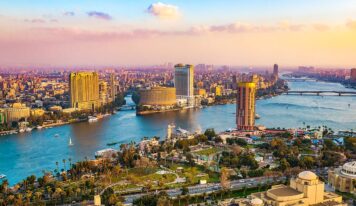




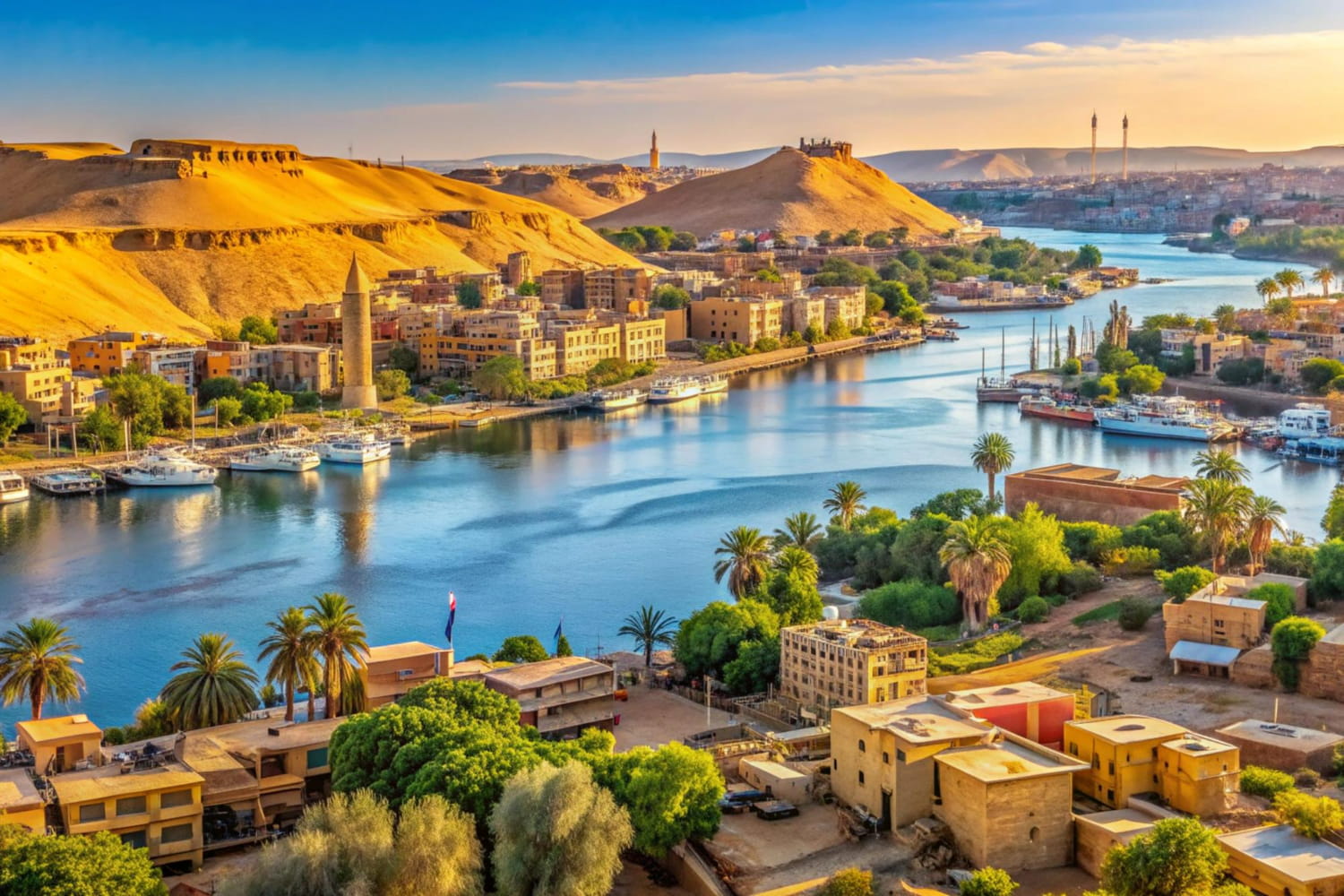
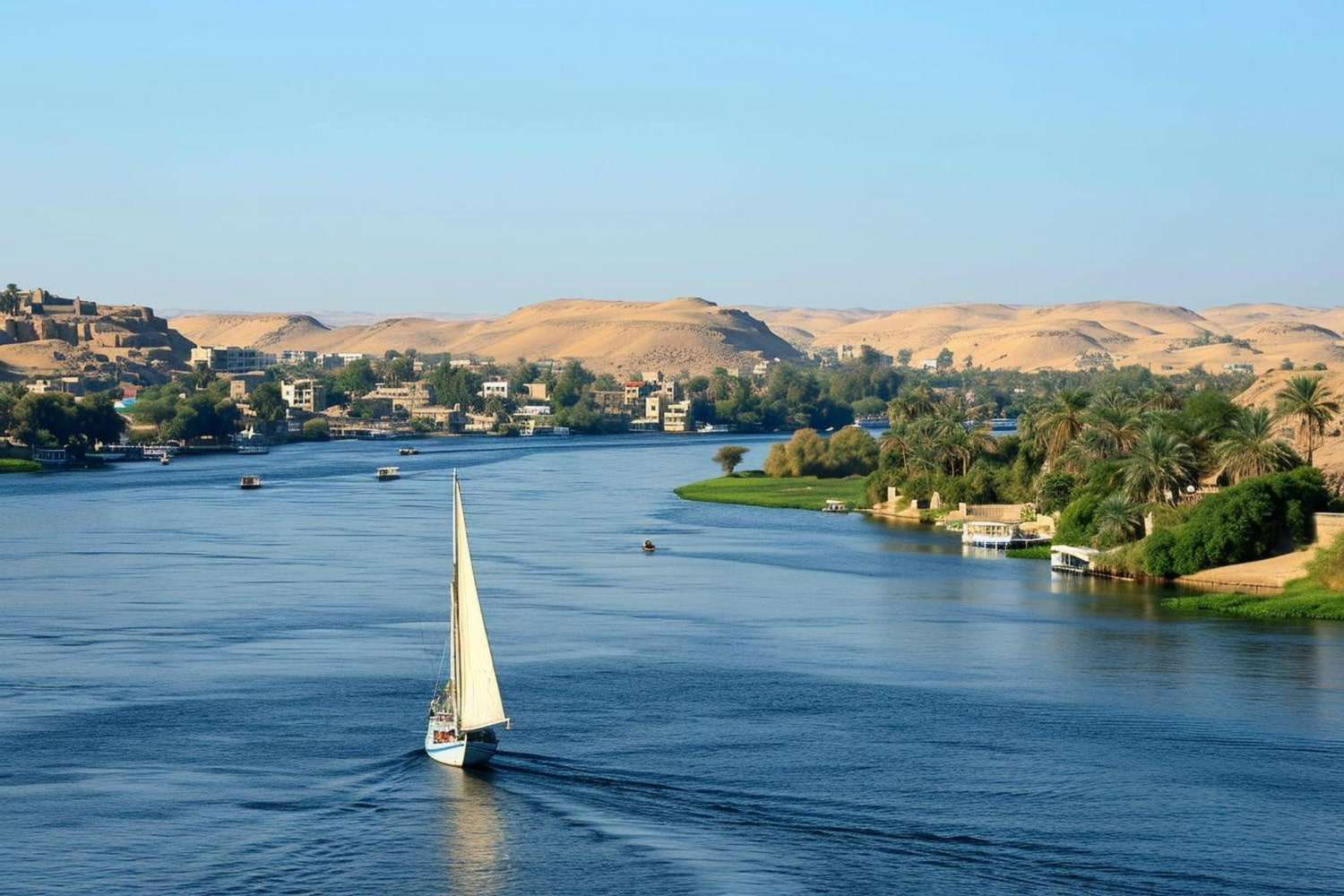
If Cairo welcomes you with noise, traffic, and endless movement, Aswan feels like an invitation to take a deep breath and simply slow down. Here, the Nile seems wider, granite islands rise from the water, palm trees sway along the riverbanks, and colorful Nubian villages create a completely different rhythm of life.
Today, we’re heading to the southernmost part of Egypt — to a city where ancient history meets vibrant Nubian culture.
One of the first things you notice in Aswan is the color. Nubian houses are painted in vivid shades of blue, yellow, pink, and orange. Their walls are decorated with geometric patterns, plants, animals, and traditional symbols. These homes are far more than beautiful scenery; they are part of a living culture that continues to preserve its language, music, crafts, and traditions.

And now for one of the best parts — the food!
Nubian cuisine is deeply connected to the natural environment of the Nile. You can enjoy freshly grilled fish, fragrant rice, vegetables, and traditional slow-cooked dishes. One interesting local specialty is waika, a rich dish made with okra, meat, and aromatic spices. Another traditional staple is eish shamsi, a type of Egyptian bread traditionally baked in clay ovens.
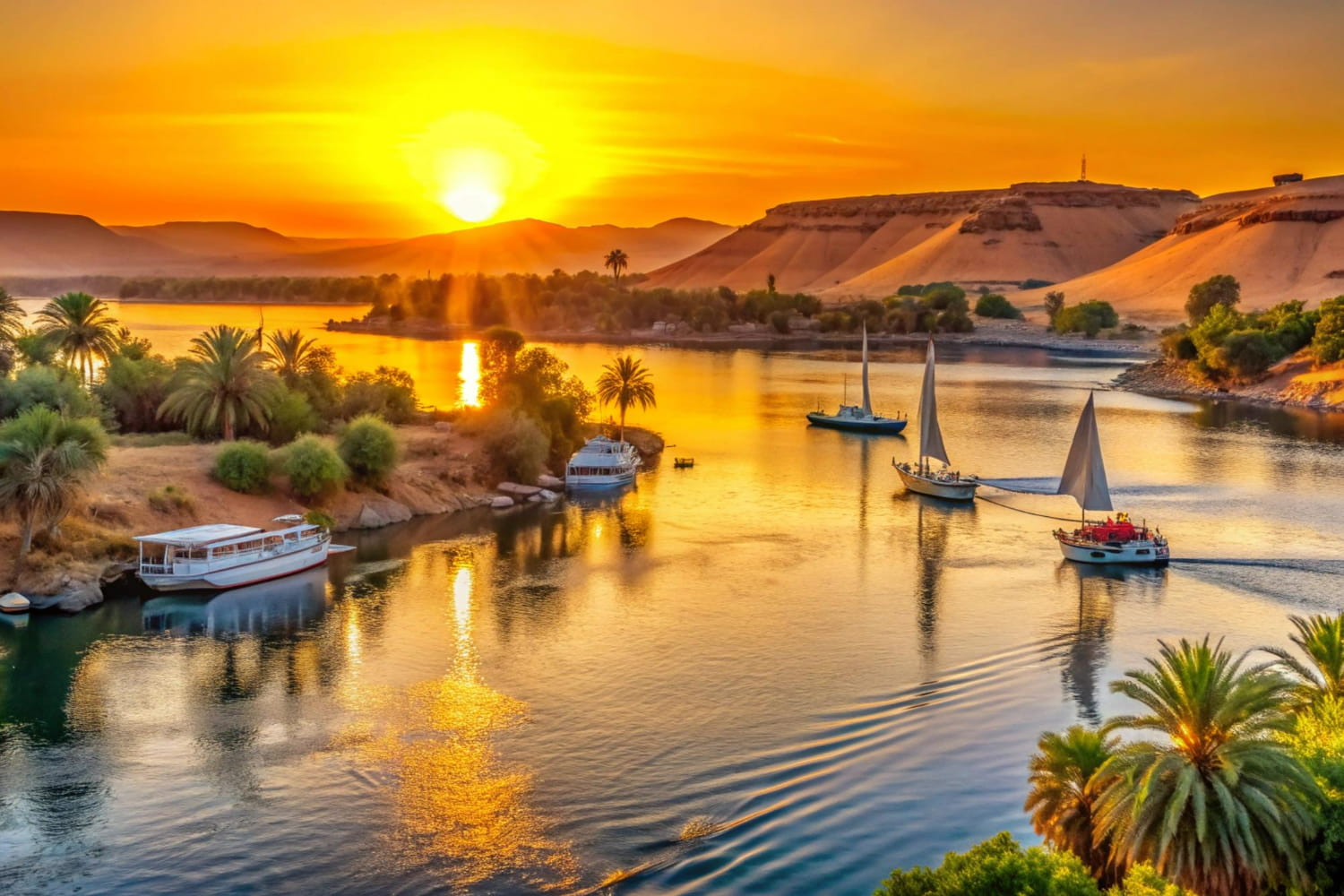
But perhaps the true symbol of Nubian hospitality is karkade, a refreshing hibiscus drink. It can be served either hot or cold and is often offered to guests as a warm welcome. Imagine sitting on the terrace of a Nubian home, holding a glass of ruby-red karkade while the Nile slowly flows in the distance.
That is Aswan.
One of the best ways to experience the city is by taking a boat to a Nubian village. Along the way, you’ll see a completely different side of Egypt: shimmering water, palm trees, islands, and brightly painted houses along the riverbanks. Elephantine Island is home to Nubian communities, while the western bank is famous for Gharb Soheil.
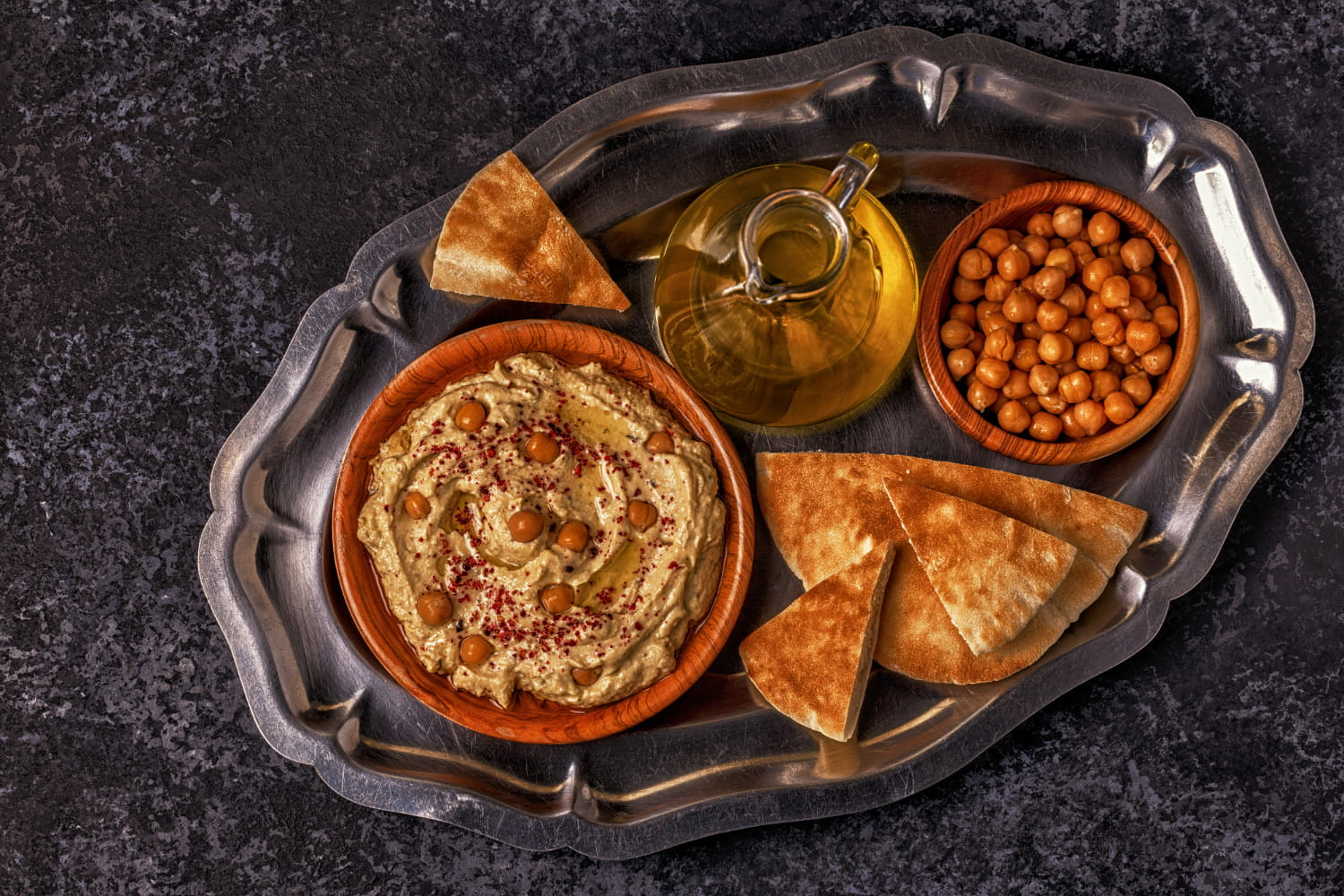
Here, you can discover traditional crafts, experience henna painting, listen to Nubian music, and taste homemade food. Music plays an important role in Nubian culture, with drums, singing, and dancing often bringing families and communities together during celebrations.
There is also a significant chapter in Aswan’s modern history: the construction of the Aswan High Dam in the 1960s. Its creation led to the relocation of many Nubian communities from their ancestral lands, which were flooded by the rising waters of Lake Nasser. Because of this, today’s Nubian villages are more than tourist destinations — they are an important part of preserving the culture, identity, and memory of the Nubian people.
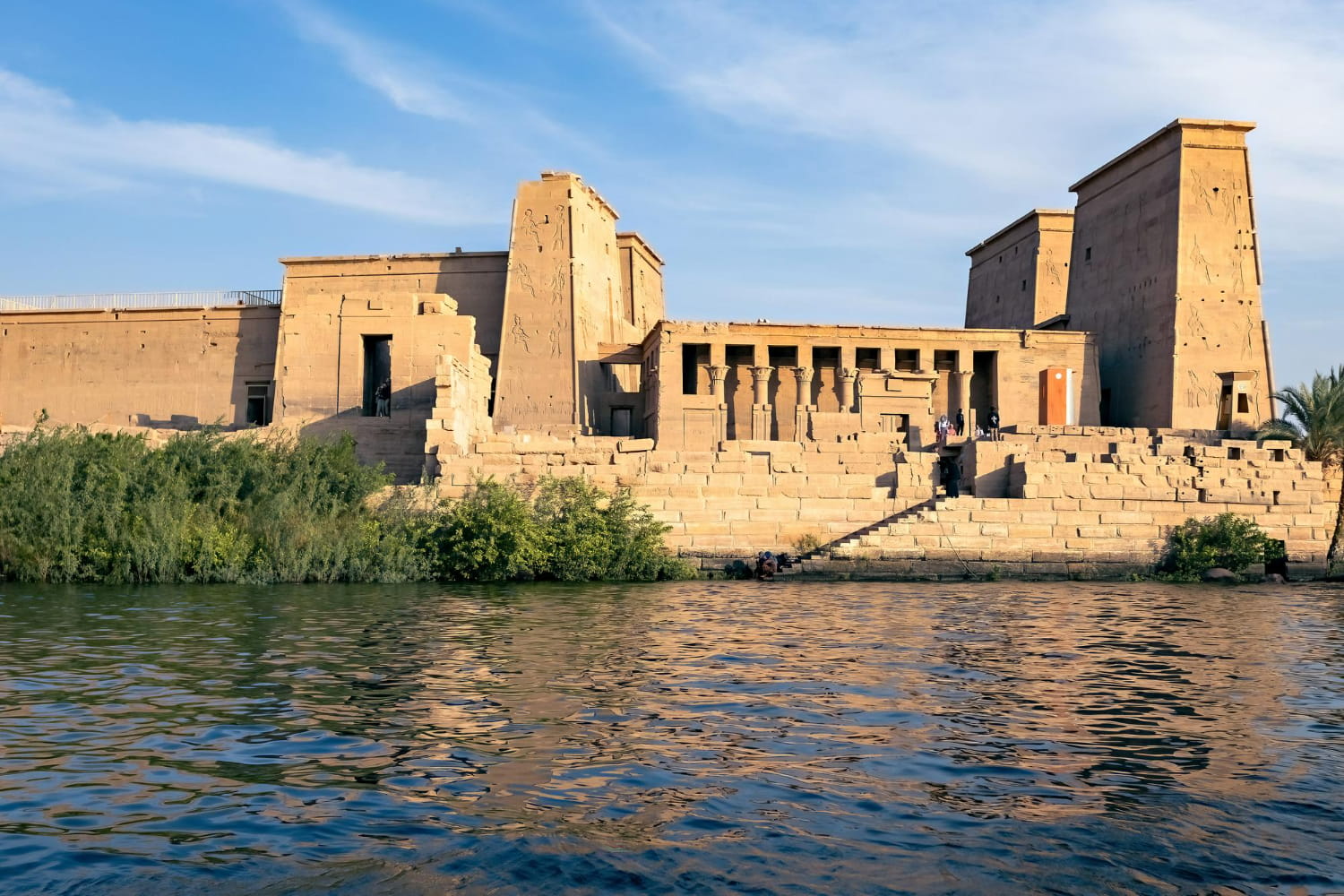
And perhaps that is exactly why Aswan stays with you. Not only because of its temples and ancient monuments, but because of its people, colors, spices, music, and the peaceful rhythm of the Nile.
Aswan is a place where Egypt becomes quieter, warmer, and wonderfully alive.
Read the article: What Secrets do the Egyptian Pyramids Hide?